
California Meal & Rest Break Violations: What They Could Cost You




Understanding your results
Annual premium pay exposure
This is what you technically owe under California law—one hour of premium pay for each time someone misses a compliant meal or rest break. We calculate it based on your team size, pay rates, and how often breaks have issues across the year.
Premium pay you'll avoid shows what you'd save when you reduce violations by 75%—a realistic target when you implement automated break reminders, real-time alerts, and proper tracking systems.
Net annual savings subtracts Timeero's cost ($9/user/month) from your estimated savings. Payback shows how quickly the subscription pays for itself through avoided penalties.
Catastrophic risk: PAGA lawsuit
When break cases escalate to PAGA claims, the numbers jump far higher than premium pay alone. Here's why:
- PAGA penalties: $100-200 per violation, per pay period (these stack fast)
- Waiting time penalties: Up to 30 days of wages per employee if violations continue after termination
- Attorney fees: Usually 25-40% of the total settlement
- Litigation costs: Expert witnesses, discovery, court fees
Your estimated range is scaled to your company size based on typical California PAGA settlements. The average PAGA break law settlement in California exceeds $1 million, but smaller companies typically settle for less.
With Timeero, you avoid shows the potential cost of lawsuits you avoid when you implement proper break tracking—by spending just a fraction of that amount on the software each year.
These are planning estimates, not predictions. Real outcomes depend on your documentation quality, the specifics of the claim, and how negotiations play out.
Common break violations that trigger premium pay
Most violations aren't intentional. They happen because the systems aren't set up right:
- Missed breaks – No meal or rest break when one was required
- Late meal breaks – Didn't start before the end of the 5th hour
- Short or interrupted breaks – Employee wasn't actually relieved of work duties
- Documentation gaps – Records don't show what actually happened during work hours (this is huge in disputes)
Why break issues happen and how to fix them
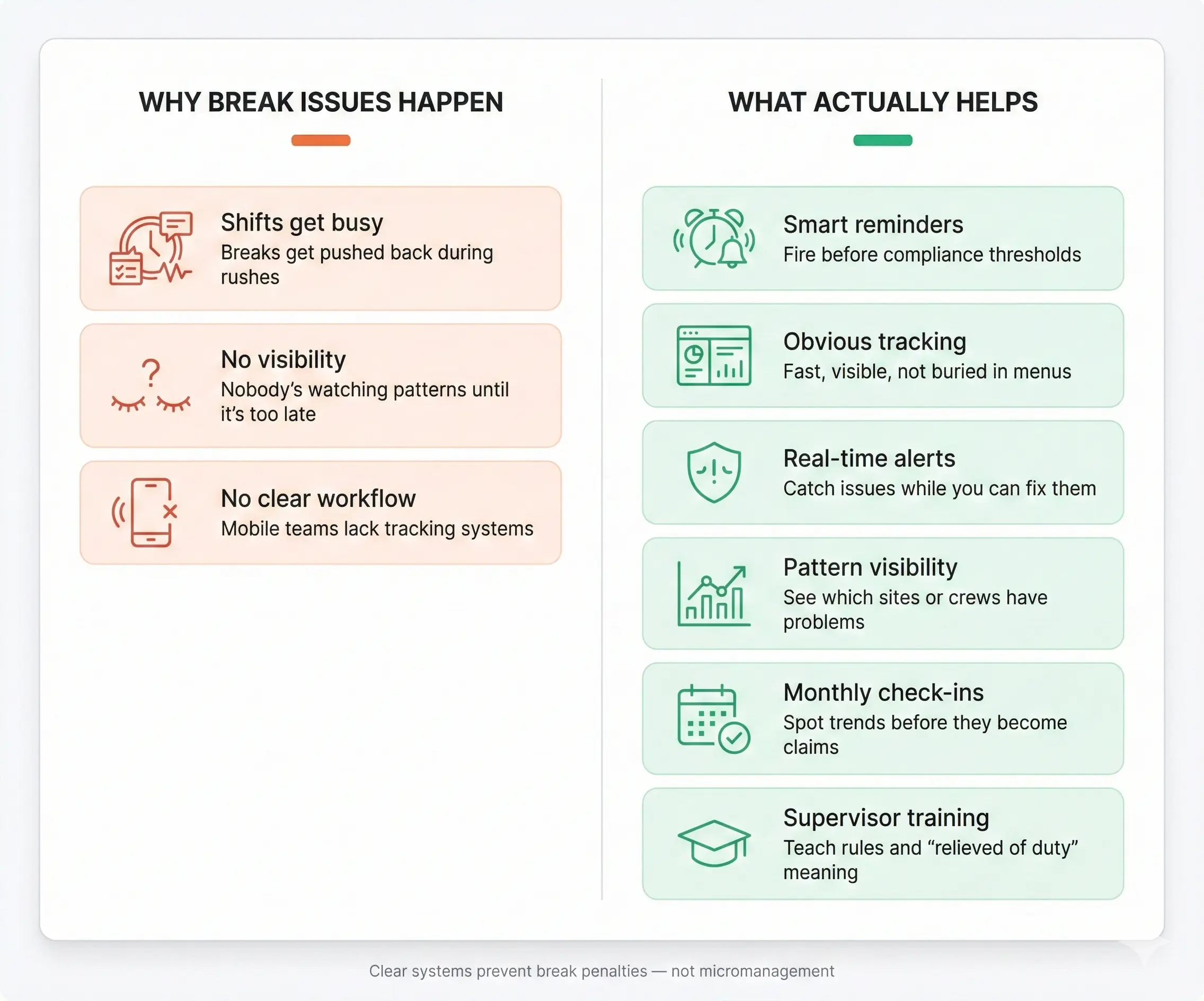
Break problems usually aren't about bad managers or lazy employees. They're about operations:
- Busy shifts and distractions push breaks back
- Nobody's keeping an eye on break patterns until a claim gets filed
- Mobile teams don't have clear workflows for tracking breaks
What actually helps:
- Proactive reminders that send before someone crosses a compliance threshold
- Break tracking that's fast and obvious (not buried in menus)
- Real-time alerts sent when breaks are late or missed
- Visibility into which sites or crews have recurring issues
- Monthly audits to catch patterns early
- Training supervisors on the actual break timing rules and what "relieved of duty" means
How Timeero helps teams stay compliant
California break policy (built-in)
We built California's meal and rest break rules directly into the platform. Timeero’s California break tracker system monitors hours worked and automatically flags break rules, notifying employees before they hit the 5th hour without a meal break or miss a required rest break.
Break reminders based on actual hours
Reminders aren't set to fixed times like "12:00 PM." They fire based on the employee’s clock-in time as well as how long they've been working. When an employee is approaching their 5th hour and hasn’t started their meal break, they receive an automatic notification.
Real-time alerts for managers
Your dashboard shows when breaks are late, missed, or too short—while there's still time to course-correct. You can view compliance issues by employee, location, or crew, so you catch and address unwanted patterns before they turn into claims.
GPS-stamped break records
Every break gets recorded with GPS location and timestamp. For field teams, this gives you location-verified proof that breaks actually happened—critical when you're defending a PAGA claim or wage dispute.
Daily sign-offs
Employees can confirm whether required breaks were taken or explain exceptions, with a timestamp and signature. These records strengthen compliance documentation and legal protection.
IRS-compliant mileage tracking
California requires employers to reimburse employees for business mileage and vehicle expenses. Timeero automatically tracks business miles using GPS tracking, separates them from commuting miles, calculates reimbursement using the IRS standard rate (the most common benchmark), and generates audit-ready reports.
Audit-ready reporting
Generate reports showing break compliance (or mileage logs) by employee, date range, or location. Export everything for payroll, HR investigations, or legal defense. Records include timestamps, GPS coordinates, and employee sign-offs.
If your results surprised you, you're not alone
Most businesses don't realize how much exposure they're carrying until they actually calculate it.
The goal here isn't to panic or hit 100% compliance overnight.
With these calculations, you can tighten your systems, improve your documentation, and catch repeat issues before they escalate into a PAGA claim or class action lawsuit.


.png)
.png)



.png)


