Workyard Review 2026: My Hands-On Test, Pricing & Pros and Cons
Jessica Packard
Last update on:
Sep 1, 2026
Published on:
If you’re managing a construction or field team, you probably don’t need another tool just for the sake of having another tool. You need to know where your crews are, when they worked, how much time they spent on a job, and how much that work is actually costing you.
I tested Workyard myself to see how it handles those day-to-day needs, including GPS time tracking, automatic clock-in, mileage tracking, geofencing, and job costing.
Overall, there’s a lot that Workyard does well, especially if you care about time tracking and job costing. But I also ran into a few things that would make me think twice about using the app depending on how your crew works.
Here’s what I found.
My quick take on Workyard
After testing Workyard myself, I can see why it's a popular option for construction and field service teams.
Here's my quick takeaway:
Best for: Construction teams that need time tracking and job costing
Starting price: $6/user/month when billed annually
What I liked: GPS visibility, mileage tracking, and project-level labor tracking
What I didn't like: The automatic clock-in can kick in when you're just driving near a job site, which could mean some inaccurate clock-ins. And there's no automatic clock-out, so workers still have to remember to clock out manually.
Pros and cons of Workyard
After testing Workyard, I found plenty to like, especially if time tracking, project tracking, and job costing are important to you. I also came across a few limitations that could matter depending on how your crews work.
Pros
✓Easy-to-use time tracking
✓Detailed project and job costing
✓Polygon geofences for more precise job sites
✓Mileage and travel time tracking
✓Built-in break settings
✓Smart Forms with offline support
✓Integrations with popular payroll and accounting platforms
Cons
✕Auto clock-in can trigger when driving near a job site
✕No automatic clock-out
✕Live location map takes a few clicks to get to
✕Workers can't see their total mileage after submitting a timesheet
✕Reporting doesn't give you much break-level detail
✕Team messaging is limited to tasks and projects
✕No live support on weekends
✕Some integrations and features require a higher-tier plan
Want to manage your construction team better?
Timeero lets you monitor their GPS location and work performance.
Setting up Workyard was pretty easy. I signed up for the free trial without a credit card and got into the app right away. I created a few projects, added users, and set up geofences without much hassle.
Most of it is pretty straightforward, but there are a few things you’ll want to set up before your crew starts using it, like location permissions, geofences, and automatic clock-in. Once I had those sorted out, I was ready to start testing.
Workyard features: My hands-on test
1. Time tracking
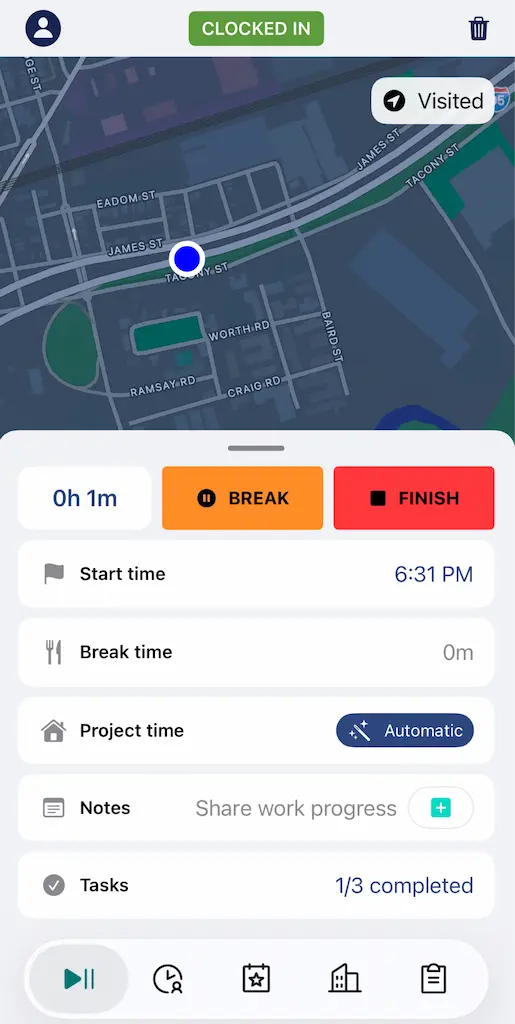
I found Workyard’s time tracking pretty straightforward. Workers can clock in and out from their phones and the app captures their location along with their time.
View of Workyard’s mobile app
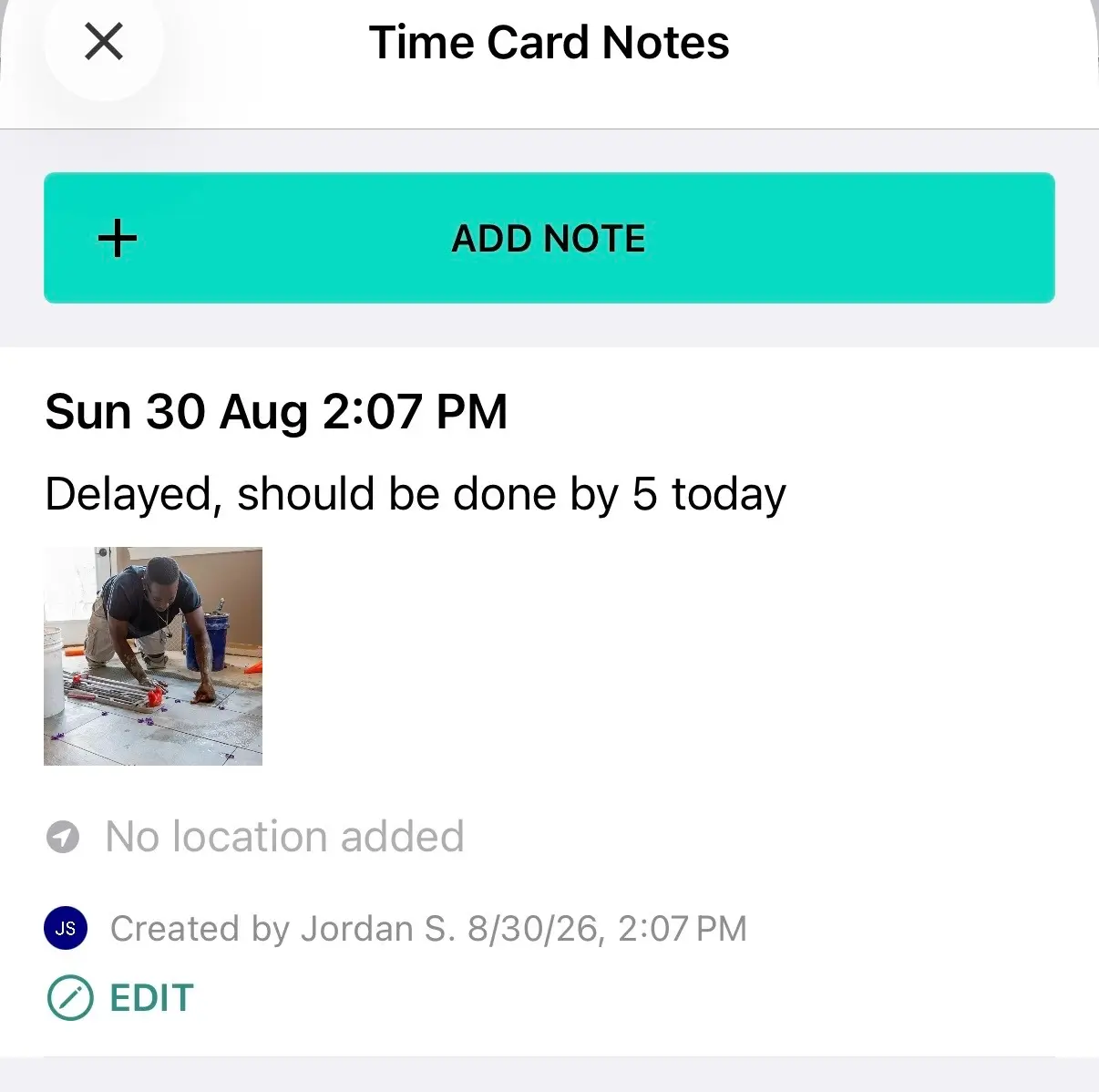
Managers can then review and edit those time cards before exporting the hours. The Time Cards section gives you a pretty detailed breakdown, including when and where a worker clocked in and out, project notes, and sign-offs. I liked being able to see those details in one place.
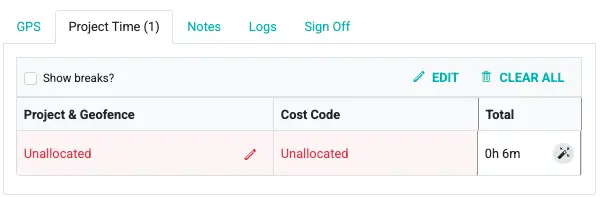
There’s also a Project Time tab where you can quickly check whether time was assigned to the right project or catch hours that haven’t been assigned to cost codes.
See what hours has not been allocated to projects and cost codes
You can also change things like geofencing, auto clock-in, break settings, and when workers are allowed to clock in or out. So, if you have specific rules for how your team tracks time, there’s some flexibility to set those up.
Workyard also offers a kiosk option for teams that prefer having workers clock in from a shared device. The kiosk uses photo ID verification, so it works a little differently from the regular mobile clock-in experience. This could make more sense for a fixed job site where everyone starts and ends their day in the same place.
One thing worth knowing is that some of Workyard's automatic features depend on an internet connection. If a worker gets to a job site and doesn’t have service, they may have to clock in manually. That’s something to keep in mind if your crew works in areas with spotty service.
2. GPS tracking
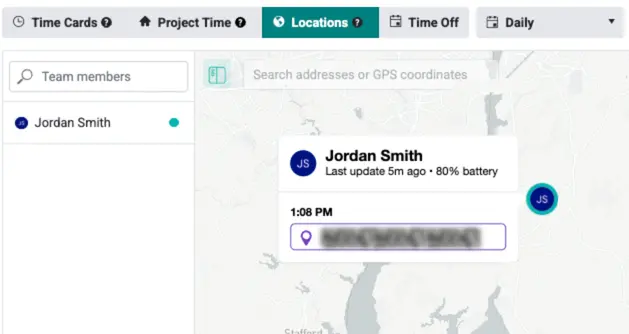
I found Workyard’s GPS tracking useful, but getting to the live location map wasn’t as intuitive as I expected. You need to go to Time Cards and then click Locations at the top to get to the location overview.
From there, you can see your team’s current location on the map and where they were at throughout the day while on the clock.
Workyard’s live map showing who’s currently working
I wish there was a separate page just for the live map. Having to go through Time Cards to get there adds an extra step when all you want to do is check where everyone is right now.
3. Geofencing
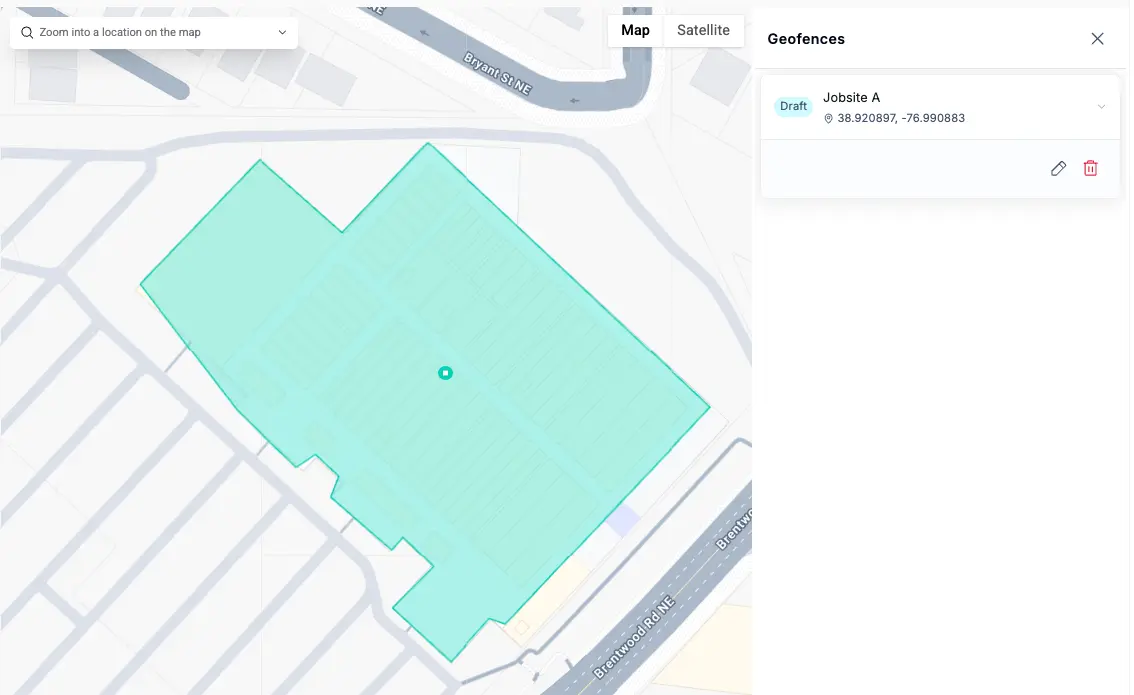
I set up geofences around a few project sites and found the process pretty straightforward. You can use a standard circle, or draw the boundary yourself with a polygon if you need something more precise. I found the polygon option useful for sites that don't fit neatly within a basic radius.
Workyard’s polygon geofence setup for a job site
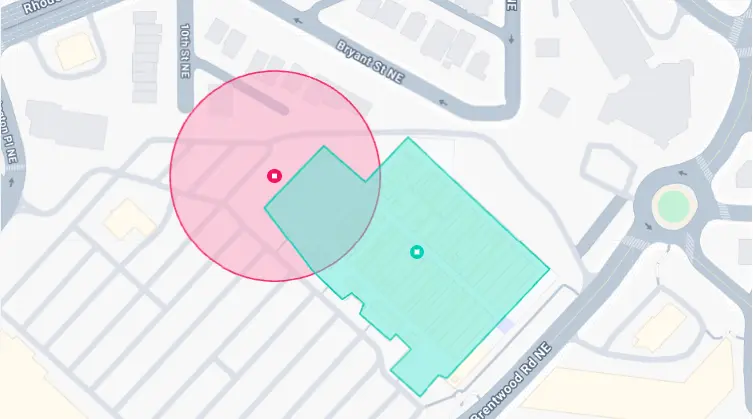
One feature I liked was the red highlight that appears when you have overlapping geofences. This makes it much easier to spot overlapping job sites before you create them, which is especially useful if you manage multiple projects close to each other and want to avoid workers getting clocked in at the wrong jobsite.
Workyard’s map showing overlapping job site geofences
Overall, I think their geofencing feature works well for different types of job sites. You have more control over the boundaries than you would with just a basic radius, but you do need to make sure everything is set up correctly and location permissions are turned on.
4. Mileage tracking
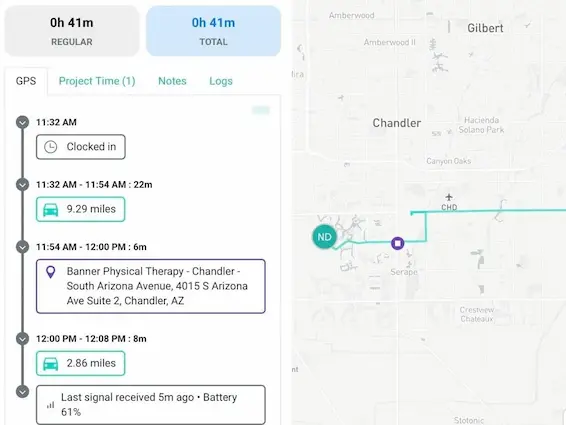
Workyard tracks mileage and travel time as workers move from one project to the next. I liked that it doesn’t just give you one mileage total for the whole trip. Instead, it breaks the trip down into segments, showing the miles driven and time spent at each location.
Workyard’s segmented mileage view for a worker’s trips
For teams that send workers to several jobs in one day, the segmented trips make it easier to see how the day was spent. You can see the travel between projects rather than having one mileage total with no context around where it came from.
One thing I noticed, though, is that workers can't see their total mileage in the app after submitting their timesheet. So if someone wants to check how many miles they drove that day, they can't just go back to their submitted timesheet and see it. A manager has to pull that information from the reporting side.
Workyard’s mobile timesheet without a total mileage breakdown
5. Automatic clock-in
Auto clock-in was one of the features I really wanted to try in Workyard. The idea is that workers get clocked in when they arrive at a job site, so they don’t have to remember to do it themselves. It sounds simple enough, but I did run into a couple of issues with it.
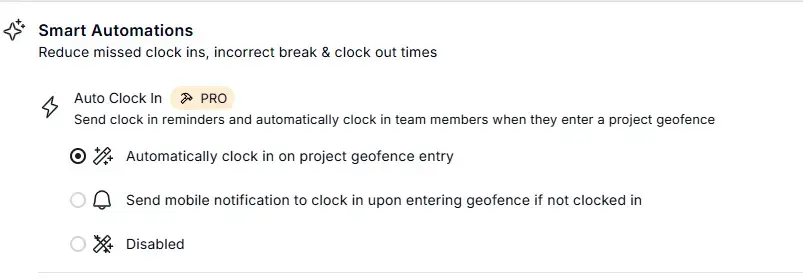
First, finding the setting wasn't super straightforward. I had to go through Company Settings and look under Automations to find Auto Clock In. There isn't much direction in the app telling you where to find it.
Workyard’s Auto Clock In setting in Company Settings
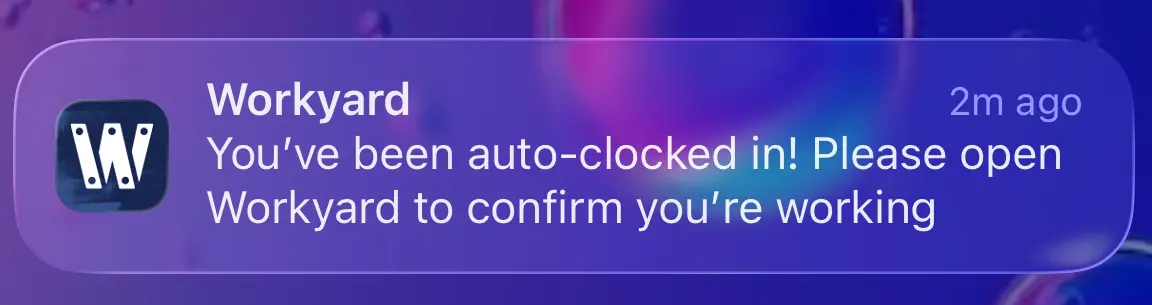
Once I had it turned on and the geofence set up, Workyard did recognize when I entered the geofence and clocked me in automatically. I also got a push notification confirming the clock-in.
Workyard automatically clocking in a worker after entering a geofence
The issue was that Workyard clocked me in while I was just driving near the geofenced area, even though I wasn’t physically inside the geofence. This could be an issue for crews working around multiple job sites that are close together.
It also relies on an internet connection. If a worker is in a rural area and has no internet connection when they arrive, they have to clock in manually. That’s something to keep in mind if your crew works in areas with spotty service.
There’s also no automatic clock-out, so your team will still need to remember to clock out when they’re done.
I like the idea behind Workyard’s auto clock-in, but I don’t think it’s completely hands-off. If you’re comparing GPS time tracking apps, I’d look closely at how they handle automatic clock-in and out.
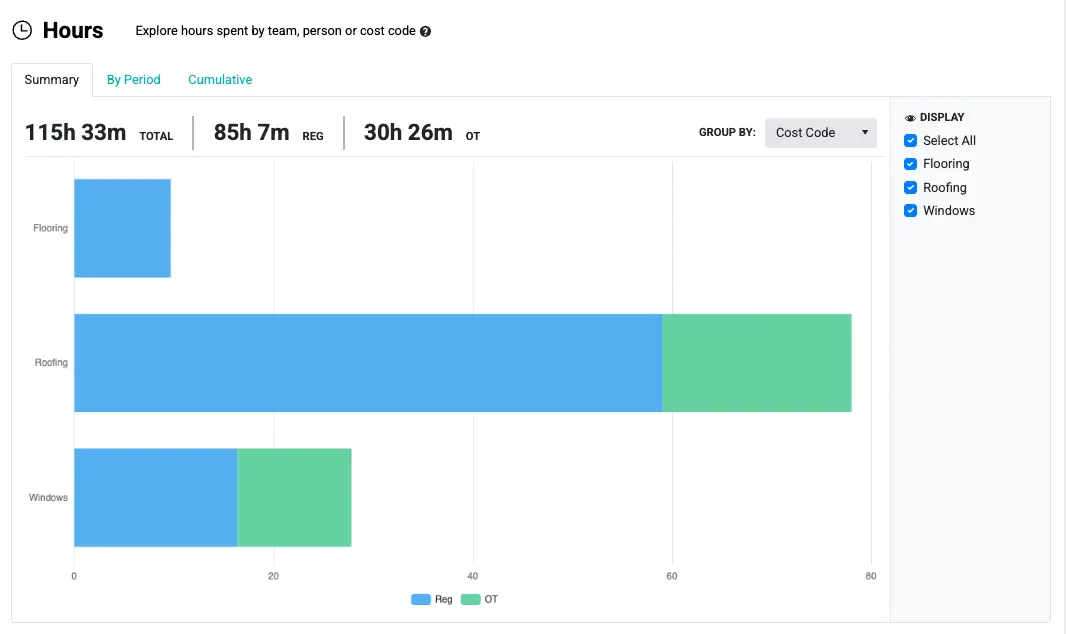
I liked that Workyard ties time tracking directly to your projects. In the Project Hub, you can see a breakdown of the hours logged for each project and then dig into those hours by person or cost code.
Workyard’s Project Hub showing hours logged by project, worker, and cost code
The job costing view is useful if you want to see where your labor costs are coming from. You can look at labor costs for your whole team, by individual workers, or by cost code.
7. Scheduling and tasks
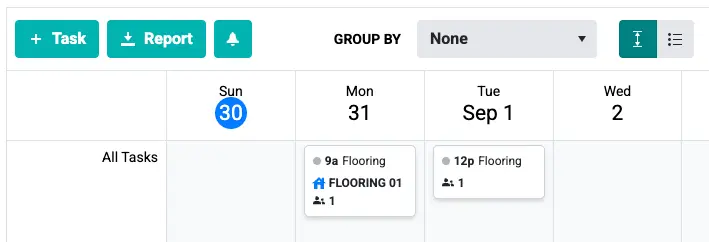
Like most of the features in Workyard, the Task & Schedule feature is pretty easy to use. Managers get a calendar view of the schedule where they can see who is assigned to what project and when.
The calendar is pretty basic. You can’t drag and drop shifts, and there’s no color coding, so it can get a little messy when you’re scheduling a lot of people and jobs.
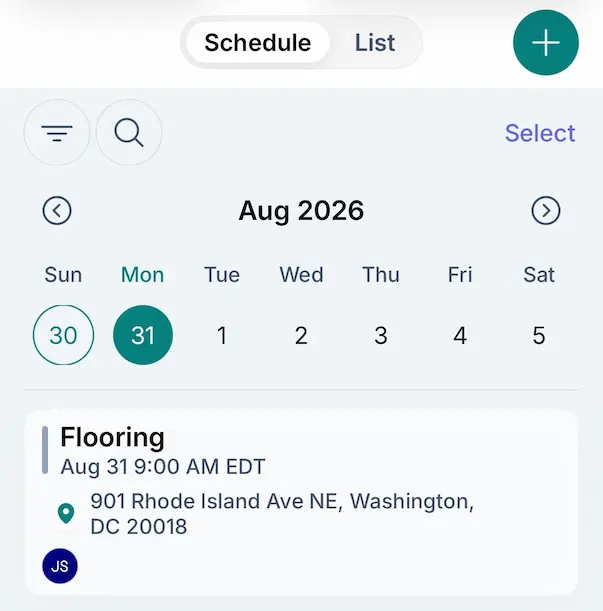
However, I liked that workers get a notification when you assign them a job. The assignment shows up in the app too, which makes it easier for them to see what they need to do that day.
Workyard’s mobile app showing assigned tasks for the day
8. Break tracking
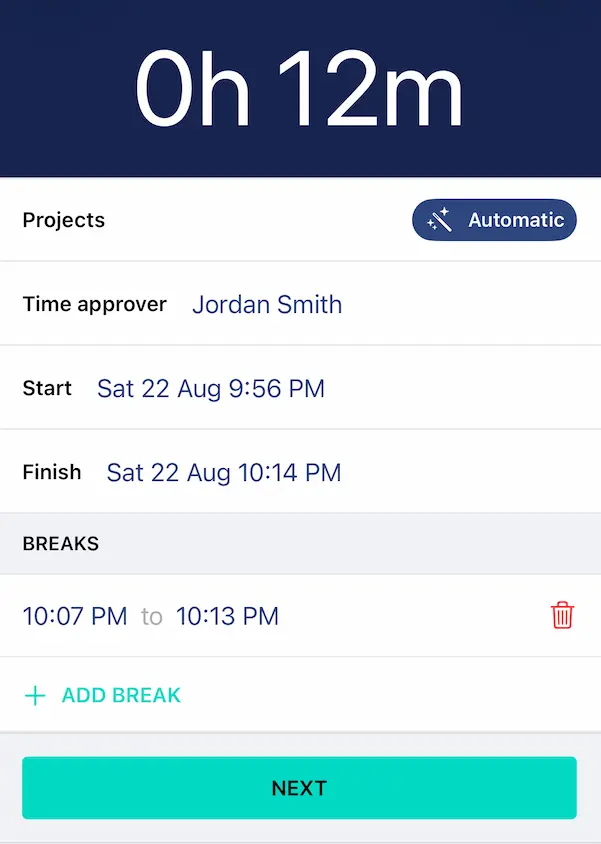
Workyard also has automated meal break settings. You can set rules for when a break should be added to a timecard, how long it should be, and when the rule kicks in. There are also settings for California meal breaks, which can be helpful if you have crews working in California.
Mobile view of Workyard’s automated breaks
That being said, I wouldn’t set up your company’s break rules once and forget about it. You still need to make sure the rules match your company’s policies and check the timecards when needed.
Overall, the setup was pretty easy to understand, and it takes some of the manual work out of keeping track of breaks.
9. Smart Forms
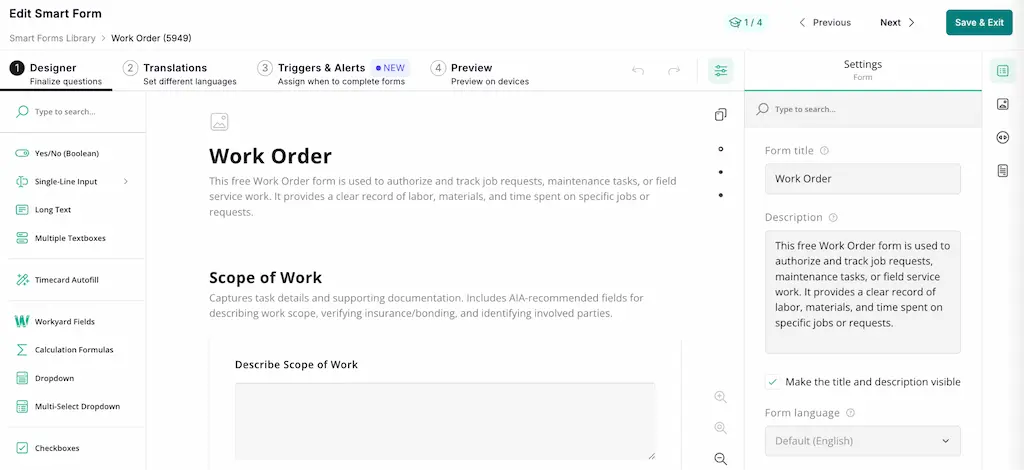
I also tested Workyard’s Smart Forms. You can use them for inspections, checklists, and different types of field forms. There are options to add photos, signatures, timestamps, and location details. They also have some pre-built templates, so you don’t always have to start from scratch.
Workyard’s Smart Forms for creating field inspections and checklists
You can also set forms to show up based on certain events, like when a crew member clocks in, clocks out, or reaches a geofence. That gives you some flexibility in when you want a form to be filled out.
I did like that the forms can be used offline. That’s helpful if your crews are working somewhere with little or no service, since they can still fill out the form and sync it later.
10. Communication
Workyard has messaging built into projects. While on the job, workers can send photos and notes, and managers can respond.
I liked that the messages stay attached to the job. So if you need to go back and see what was discussed, you don't have to search through a bunch of texts.
Workyard’s project messaging showing conversations tied to a job
The only problem I saw is that the conversation has to be about that specific task or project. It’s not really a place for general team chats, so you’d still need another tool for that.
11. Reporting
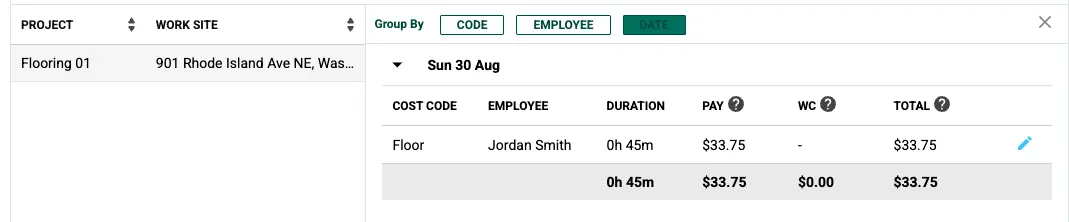
I found the reporting pretty easy to navigate. In the main reporting view, you can look at the data by cost code, employee, or date. It’s easy to switch between different views depending on what you’re looking for.
Workyard’s reporting dashboard showing time data by cost code, worker, and date
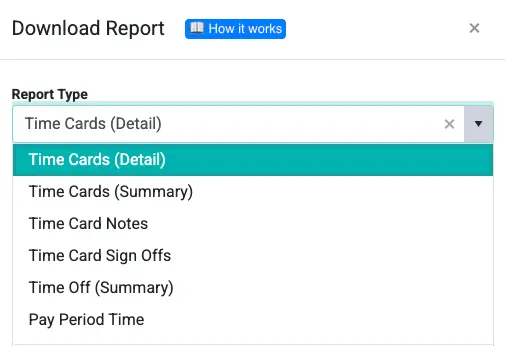
There are also more download options under Time Cards. You can download reports for notes, sign-offs, time off, pay periods, or the full time cards, and you can pull them for one team member or everyone at once.
Workyard’s Time Cards showing available report download options
The downside is that the reports aren’t super detailed. For example, you can’t really drill down into things like individual breaks. If you need that level of detail, you’ll have to go back to the time cards instead.
12. Integrations
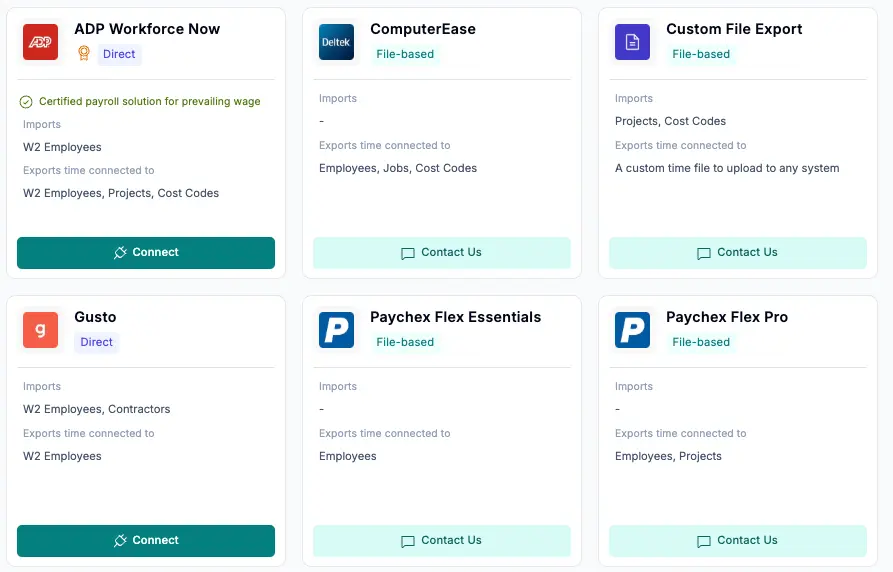
I also wanted to see how well Workyard fits with the tools you’re probably already using. It connects with popular payroll and accounting platforms like QuickBooks, ADP, Gusto, Paylocity and Sage.
Workyard’s list of available payroll and accounting integrations
The biggest benefit is that you don't have to manually move all your hours from Workyard into payroll. Once you review and approve employee work hours, you can export them to your payroll system.
Workyard also connects with some construction and project management tools, which is helpful if you want to keep your field and project data connected. The only issue is these are only included with the higher-tier Autopilot plan, so you’ll need to pay more if you want them.
Pricing
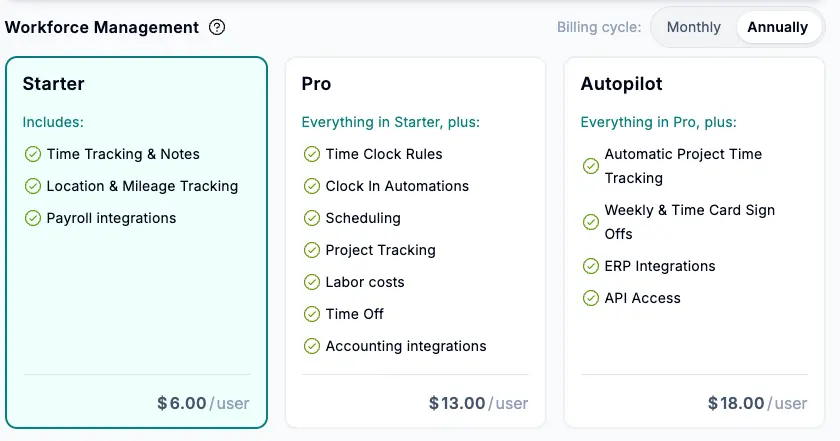
Workyard’s current pricing starts at $6 per user per month when billed annually, with monthly billing also available. There are four main plans: Starter, Pro, Autopilot, and Enterprise.
One thing to watch is the $50 monthly company fee. That fee applies on top of the per-user price, including the Starter plan, so the $6/user price isn't the full monthly cost.
You may also need a higher-tier plan for some of the features that make Workyard especially useful. For example, scheduling, integrations, automatic clock-in, and automated meal breaks are part of higher-tier plans.
Workyard’s pricing plans with the $50 monthly company fee
So don’t compare Workyard based on the per-user price alone. Add the $50 monthly fee and the features you actually need, then compare that total with the alternatives you’re considering.
Why do construction teams choose Timeero over Workyard?
Workyard does a lot, and if you need time tracking tied closely to project costs, it’s worth a look. But it’s not necessarily the best fit for every field team.
Here are some of the reasons teams choose Timeero instead:
1. They want complete hands-off automatic clock-in and out
Workyard can automatically clock workers in when they arrive at a job site, but they still have to remember to clock out.
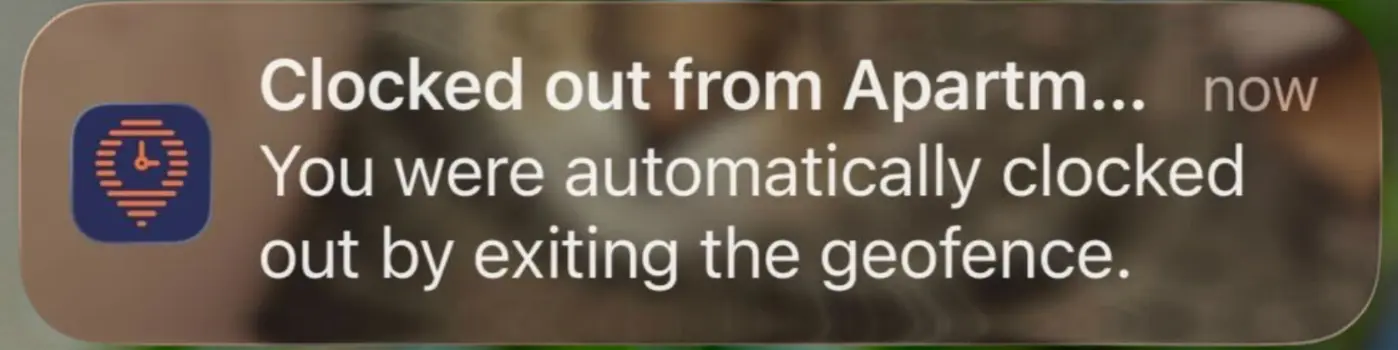
With Timeero, you can set up geofences to handle both. A worker arrives at the job site, and they’re automatically clocked in. They leave, they’re automatically clocked out.
The Auto Clock In/Out feature only triggers when the worker is actually inside the geofence, so driving past a job site won’t accidentally clock someone in.
Timeero’s geofences automatically clock workers in and out at job sites
That makes the clock-in process more reliable for crews moving between multiple jobs every day. Workers don't have to worry about remembering to clock in or out, and managers don't have to spend time fixing missed punches.
2. They want to know where their crews are without digging for it
When you have crews spread across several job sites, you shouldn't have to hunt through timecards just to see where someone is.
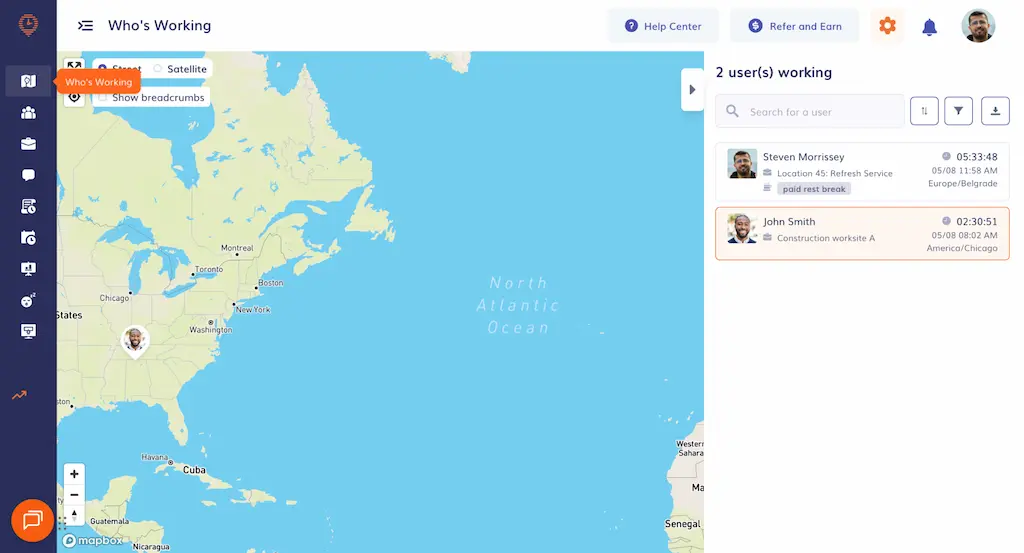
Timeero gives managers a quick view of where their crews are and where they've been during the day. You can see location history, check time spent at a site, and get a better idea of what’s happening in the field.
Timeero’s live map shows crew locations and location history
So if a customer calls asking where their crew is, or you’re trying to figure out whether someone actually made it to a job site, you have the information right in front of you.
3. They need more useful reporting
Timeero gives you more ways to look at the data you're already collecting.
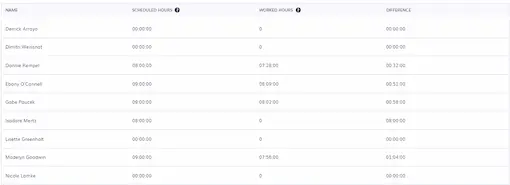
You can run reports by user, group, date range, job, or task. You can see regular and overtime hours, mileage, labor costs, and time spent on specific jobs. There's also a Scheduled vs. Hours Worked report if you want to see whether your crews are actually working the hours they were scheduled for.
Timeero’s Scheduled vs. Hours Worked report
Mileage is another good example. Workyard tracks mileage, but its mileage reporting is limited. Timeero has a dedicated mileage report that shows mileage by worker, job or task, date, and mileage cost. That gives you something you can actually use when calculating reimbursements.
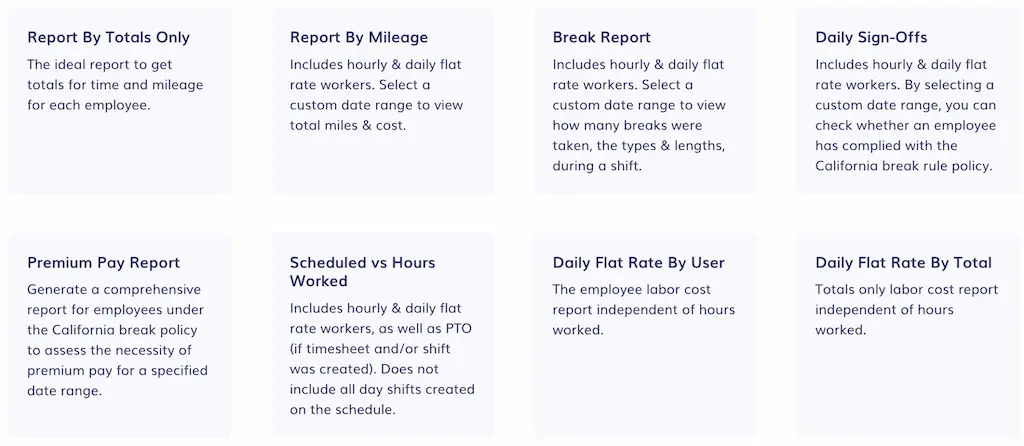
Timeero’s reporting dashboard with multiple time, compliance, and labor reports
There are also reports for breaks, missed punches, flagged time entries, and other timekeeping details. You can export reports to CSV or PDF, or send time and mileage data to supported payroll systems.
You can pull the specific report you need instead of sorting through a bunch of data every time.
4. They want better visibility into breaks and compliance
When your crews are spread across job sites, keeping track of who took their breaks and when can get messy.
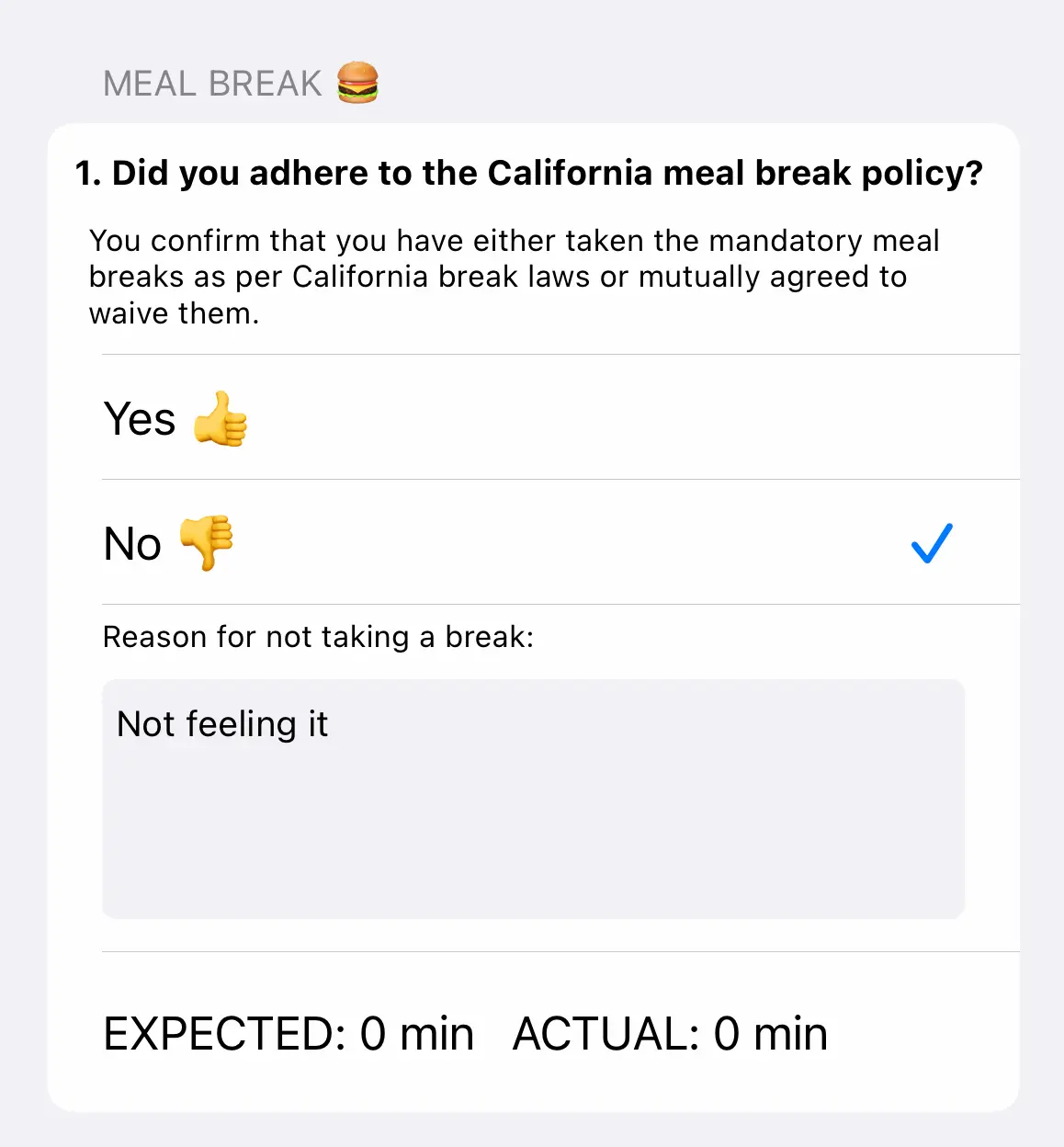
Timeero has a built-in California break compliance tool that helps managers stay on top of required meal and rest breaks. Workers get reminders when it's time to take a break, while GPS and timestamps give you a record of when breaks started and ended.
Timeero’s California break compliance view for workers
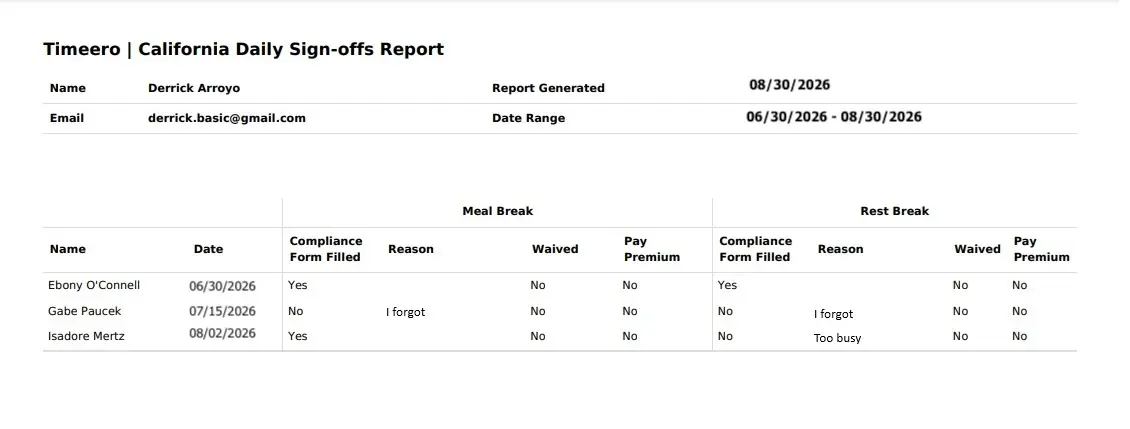
You can also use the Daily Sign-Off report to have workers confirm their shift and meal break information at the end of the day. If there's a missed break or another issue, managers can see it in the reports. The Premium Pay Report can also flag situations where premium pay may be owed.
Timeero’s Daily Sign-Off Report showing shift and meal break confirmations
Final verdict
After testing Workyard, I can see why teams use it. The time tracking is easy to use, GPS tracking works well, and you can connect labor hours to specific projects. If job costing is one of your biggest priorities, there’s a lot to like here.
I think your choice is going to come down to what you need from your time tracking app. Workyard is a good option if project costing is the main focus, but if you need more automation, detailed mileage and break reporting, and an easier way to keep an eye on your crews and break compliance, Timeero is worth a look.
If you want more hands-off time tracking, detailed mileage and break reports, and an easier way to keep up with your crews, give Timeero a try. You can start a free trial today, no credit card needed.
FAQs
Does Workyard have automatic clock-in and out?
Workyard can automatically clock workers in based on their location, but does not offer auto clock-out. The app doesn't provide fully hands-off clock-in and clock-out in the same way as Timeero. During testing, automatic clock-in could also trigger when driving near a job site, so you’ll want to pay attention to how geofencing is configured.
Does Workyard track mileage automatically?
Yes. Workyard can automatically track mileage and travel time in the background. It breaks trips into segments, so managers can see the mileage and travel time between projects. One limitation I found is that workers can't see their total mileage in the app after submitting their timesheet.
What is the difference between Workyard and Timeero?
Workyard is a strong choice for construction teams that want time tracking closely tied to project costs and cost codes. Timeero is a better fit if you’re more focused on hands-off time tracking, GPS visibility, mileage, automatic clock-in and out, and break compliance.
If you want a complete workforce management app with GPS time tracking, mileage, automatic clock-in and out, and break compliance, Timeero is the better fit.
Ready to take your construction management to the next level?
Join Timeero today and boost your efficiency! Get your free trial now. No credit card needed.
Jessica Packard is a B2B SaaS content strategist lead who helps companies turn SEO and content into real growth. With a mix of creativity and data-driven thinking, she builds strategies that drive traffic, generate leads, and make content a core part of the business.



.webp)


.png)
.png)



.png)


