75% of Workers Are Comfortable With GPS Tracking. Why Employers Still Think They Aren’t.
Jessica Helms
Last update on:
April 22, 2026 10:22 AM
Published on:
TL;DR
Employers often fear GPS tracking will spark employee backlash—but the data tells a different story. In a survey of 1,000 field workers, 75.5% said they feel comfortable or very comfortable with GPS tracking during work hours. Employee discomfort isn’t driven by GPS itself, but by how the technology is introduced. Clear communication, transparent policies, and safeguards against off-hours tracking dramatically increase employee trust and acceptance.
Despite what employers believe, most employees are comfortable with GPS tracking during work hours.
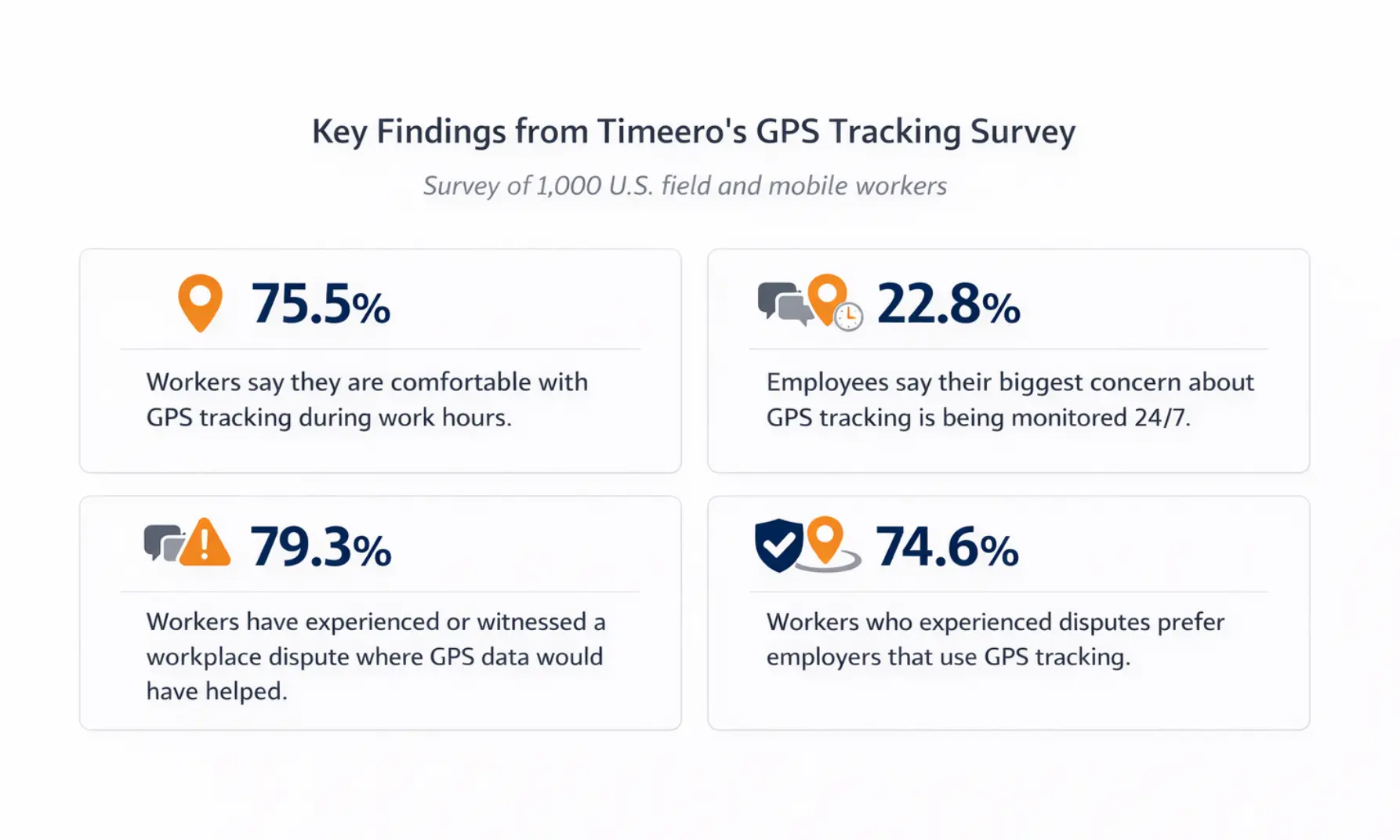
In our survey of 1,000 field workers, 75.5% of employees reported feeling comfortable or very comfortable with GPS tracking.
Employees’ distrust in the technology isn’t shaped by its presence, but rather, how thoroughly and transparently it is introduced.
Try GPS tracking your team will actually accept
Track location only during work hours and give everyone the same accurate records.
When any technology that collects personal data is introduced to employees, employers usually hear some of these phrases from workers:
“I don’t like you having access to my location.”
“Are you going to track me 24/7?”
“This feels like you don’t trust us.”
“I’m going to quit if we start using a GPS app.”
It’s only natural that employers feel hesitant to implement a GPS tracking system. Their employees have voiced concern, and some have even threatened to quit. Introducing this new technology could open up a lot of privacy complaints that business owners just don’t have time for.
So instead of preparing for pushback, employers dismiss the thought of GPS tracking altogether.
How do workers actually feel about GPS tracking?
Workers might have strong feelings toward GPS tracking at first, but the data shows that 75.5% of workers are accepting of GPS tracking in the workplace.
What contributes to this high level of employee comfort and acceptance?
1. Transparent communication during rollout
Workers are more likely to distrust GPS tracking in the workplace if you fail to explain its purpose and how it will be used during work hours. That’s why how you introduce GPS tracking to your teams is so important. The more transparent you are about your company’s GPS practices, the more comfortable your workers will be with the technology.
2. Clear understanding of why GPS is being used
Most field employees understand why their employer uses GPS tracking in mobile roles. Teams are always on the move, and job locations change daily. With GPS, managers can better track project progress and allocate employee time to the right jobs.
3. Protection provided during workplace disputes
Employees value the protection that GPS tracking provides, even more so during time and mileage disputes. Companies that utilize GPS systems have access to detailed, time-stamped records that manual reports can’t match.
When an employer claims an employee clocked out off-site, or an employee says they were shorted overtime hours, GPS-backed timesheets provide irrefutable proof that can be used to resolve employee/employer disputes.
Clearly, workers aren’t worried about the fact GPS tracking is being used at work. They understand its purpose and value its protection.
So why might employees push back against it?
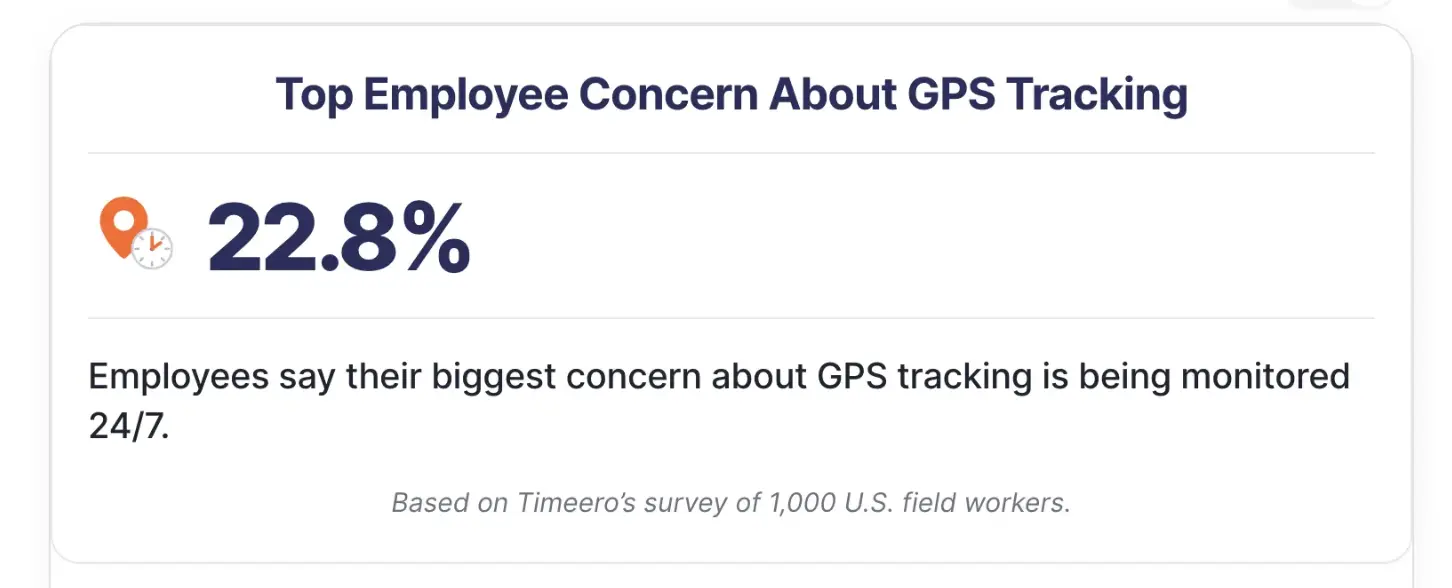
According to our survey, 22.8% of employees said their biggest concern when it comes to GPS, is being tracked 24/7. But employers can do several things to resolve this fear, namely having a clear GPS tracking policy in place, and enabling system controls that prevent tracking outside of work hours.
Helpful resource
A clear written policy is one of the simplest ways to reduce employee concerns about GPS monitoring.
You can create one quickly using the
GPS Tracking Policy Builder
, which helps define when tracking starts, when it stops, and how the data is used.
The real risk isn’t GPS, it’s silence
It isn’t employee backlash that employers should be concerned about when deciding whether or not to implement GPS tracking. Even though employees may voice strong opinions about the new technology, that alone is not a reason to avoid introducing GPS.
Out of 1,000 workers surveyed, results show that the quality of rollout and onboarding is the single most contributing factor to employees’ comfort with GPS.
85.5% of workers said that when employers take the time to thoroughly explain why GPS tracking is being used, they feel comfortable or very comfortable with GPS tracking at work.
How GPS rollout affects employee comfort
Transparent rollout
85.5%
85.5%
Brief explanation
69.6%
69.6%
Quiet or undisclosed rollout
52.2%
52.2%
Difference between transparent and undisclosed rollout:
+32.7 percentage points
Based on Timeero’s survey of 1,000 U.S. field workers.
When the employer offers a brief or vague introduction to the technology, comfort drops to 69.6%.
Many employers hesitant to introduce GPS may choose to introduce it quietly, never disclosing that the new app is enabled with GPS tracking. When workers find out about GPS after it’s already in use, only 52.2% of workers report feeling comfortable with using the technology at work.
These statistics show us that the difference between a well-explained rollout and a secret introduction is 32.7 points, a huge gap that depends solely on how well the employer communicates and introduces GPS to their employees.
So it isn’t GPS itself that employees resist, it’s poor rollouts.
What this means for businesses
If you want to avoid potential employee pushback when implementing a GPS tracking system, there are a few things you can do to make sure onboarding runs as smoothly as possible.
GPS should be positioned as:
✅ A fairness tool – when managers and employees have access to the same data, accurate records protect everyone.
✅ A dispute protection tool – GPS-verified records prevent arguments about hours, mileage, and job completion.
✅ A hiring advantage in some industries– employees working in industries that heavily depend on time and mileage records prefer working for an employer that uses GPS tracking.
✅ A trust builder when handled transparently – open communication during rollout, clear policies, and shared visibility increase employees’ comfort with GPS tracking.
Your employees probably already accept GPS tracking for what it is, but how well you introduce the technology to your teams plays a significant role in how comfortable they feel using it at work.
It’s not GPS that employees question—it’s the rollout
It’s clear from the data that the majority of employees are comfortable with GPS tracking. Most workers understand the role it plays in the workplace and appreciate the protection it provides during disputes. While the benefits of implementing GPS tracking outweigh the risks of employee backlash, how well you introduce the technology to your employees only increases the likelihood of their comfort and acceptance of GPS tracking at work.
On its own, GPS tracking does not damage employee trust. However, how well an employer introduces the technology to their workforce increases employer distrust, especially when there are quiet introductions, unclear explanations, and poorly defined work hour boundaries.
What percentage of workers are comfortable with GPS tracking?
Of 1,000 field and mobile workers surveyed, 75.5% of employees are comfortable with using GPS tracking at work.
What is the biggest employee concern about GPS tracking?
The biggest concern employees have with GPS tracking isn’t privacy concerns. 22.8% of employees surveyed said their biggest concern with GPS tracking is being tracked 24/7.
Plan your GPS rollout the right way
Learn how clear policies and transparent tracking build employee trust.
Jessica is a skilled writer and proofreader with a unique flair for crafting engaging and impactful content. Her work reflects her ability to connect with clients on a personal level while successfully addressing their most pressing concerns. Jessica's professional background includes: teaching, social media marketing, and e-commerce. She resides in Alabama and loves the Golden Girls sitcom.




%202.svg)


.png)
.png)



.png)


